Knowing how to validate an ai built mvp before launch is what turns an impressive demonstration into a product real customers can trust. AI-assisted coding may have helped you build authentication, dashboards, payments, or an entire workflow in weeks. That speed is valuable. The next step is not to rebuild everything automatically, but to identify what is already sound, what needs reinforcement, and what could fail when real users arrive.
Your AI-Built Prototype Has Already Done Important Work
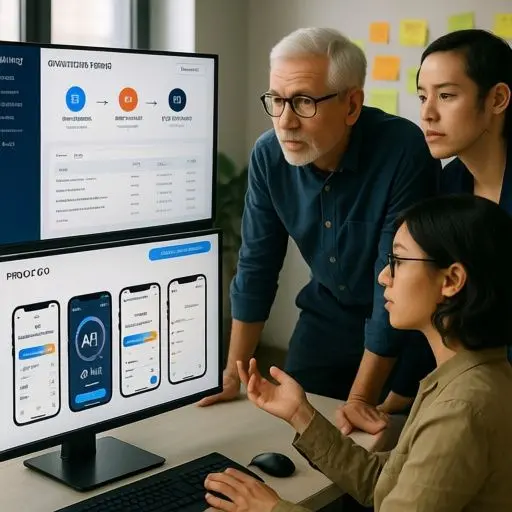
A fast prototype is valuable because it proves that your product idea can become something users can see, click, and understand. It can help you clarify requirements, demonstrate the concept to investors, and collect feedback before committing to a larger development budget.
We approach AI-built products with respect for the progress already made. In many reviews, the prototype contains usable interface components, sensible workflows, and code worth retaining. The task is to separate those strengths from shortcuts introduced while optimizing for speed. Our experience with building an AI-powered MVP shows that AI is most effective when rapid generation is followed by structured engineering review.
A prototype should therefore be treated as evidence, not waste. It tells the development team what users need, which screens matter, and where the original assumptions changed during the build.
Where the Prototype-to-Product Gap Usually Appears
The gap appears when a controlled demo meets unpredictable users, devices, data, integrations, and network conditions. A founder may complete the ideal journey successfully while missing dozens of edge cases that occur outside that path.
When assessing how to validate an ai built mvp before launch, our team looks closely at recurring risk areas:
- Incomplete error handling: The interface works when an API responds correctly but freezes or exposes technical messages when it fails.
- Weak authorization: Users can sign in, but role checks are missing from server-side endpoints.
- Fragile data logic: Duplicate submissions, deleted records, or unexpected field values cause inconsistent results.
- Device-specific UX problems: A workflow tested on a desktop becomes difficult to complete on a smaller mobile screen.
- Hidden dependency risks: Generated code relies on outdated packages, exposed keys, or third-party services without fallback behavior.
These problems rarely appear in a polished founder demo. They surface when 20 beta users take different routes through the application, refresh at the wrong moment, upload unusual files, or abandon a payment halfway through.
How to Validate an AI Built MVP Before Launch
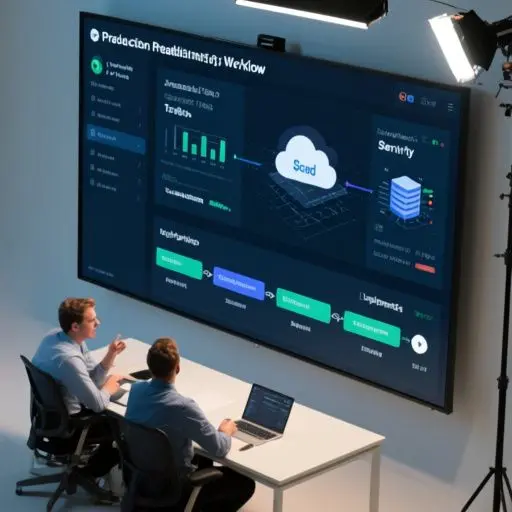
To validate an AI-built MVP, test its customer value and technical behavior under realistic conditions rather than checking only whether its main features work. We recommend walking through the following questions before opening public registration:
- Can a new user understand the product? Ask several people outside your team to complete the core task without verbal guidance.
- Does every critical workflow have a failure state? Test invalid inputs, expired sessions, API timeouts, duplicate clicks, interrupted uploads, and declined payments.
- Are permissions enforced by the backend? Hiding an admin button in React is not a security control. The Node. js, Python, or serverless API must verify access independently.
- Can you trace a problem? Confirm that logs reveal which request failed, for which environment, and at what time without exposing personal data.
- Can the product recover? Check database backups, deployment rollback procedures, password recovery, and retry behavior.
- Does the architecture match the next stage? Review hosting, database design, API limits, and choosing a SaaS technology stack before marketing creates a traffic spike.
This is the practical core of how to validate an ai built mvp before launch: test what users will actually do, including the actions you did not intend them to take.
What a Production-Ready MVP Actually Needs
A production-ready MVP needs enough security, observability, resilience, and supportability to serve early customers safely without becoming overengineered. It does not need infrastructure designed for millions of users on day one.
The following matrix explains what we normally expect from a credible first release:
| Area | Prototype behavior | Launch-ready baseline |
|---|---|---|
| Errors | Console output or generic failure | User-safe messages, structured logs, and Sentry alerts |
| Security | Basic login and hidden interface controls | Server-side authorization, secret management, and dependency checks |
| Quality | Manual happy-path testing | Critical automated tests plus browser and device testing |
| Operations | Manual deployment with limited visibility | Repeatable deployment, backups, monitoring, and rollback steps |
For many products, the most useful tools are straightforward: GitHub Actions for automated checks, Sentry for error tracking, PostHog for product analytics, Stripe test environments for payment scenarios, and Playwright for browser testing. AWS CloudWatch, Azure Monitor, or Google Cloud Logging can add infrastructure visibility.
Our professional quality assurance process prioritizes the actions that protect the customer journey. We begin with authentication, payment, data integrity, and the product’s primary outcome. Secondary settings and low-traffic features can follow after the riskier paths are stable.
How Long MVP Validation and Stabilization Usually Take
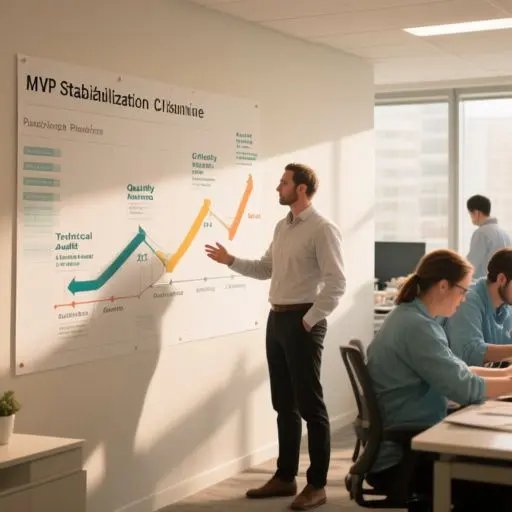
Most focused MVPs can be assessed within several days and stabilized over roughly two to six weeks, depending on code quality, product scope, and the severity of the findings. That estimate is a practical range rather than a promise.
A small application with clear React components, documented APIs, and a conventional database may need targeted repairs rather than a rewrite. A larger product may take longer if multiple AI-generated modules duplicate logic, security rules are inconsistent, or there is no separation between development and production environments.
When planning how to validate an ai built mvp before launch, we divide the work into an audit, critical fixes, regression testing, and a controlled beta. This prevents the team from spending weeks polishing minor interface details while a serious data or authorization risk remains unresolved.
This Is a Normal Product Stage, Not a Failed Build
This stage is normal because prototypes and production products are intentionally optimized for different outcomes. The prototype optimizes for learning and speed; the launch-ready version optimizes for repeatability, trust, and support.
Even traditionally coded MVPs need hardening before release. AI simply makes it possible to reach a convincing interface sooner, which can make the unfinished operational work less visible. The lesson from common MVP mistakes is not to avoid fast development. It is to create an explicit checkpoint between proving the idea and inviting customers to depend on it.
How to validate an ai built mvp before launch is therefore not a question of whether AI-generated code is good or bad. It is a question of whether the current implementation has been reviewed against the risks of its specific users, data, and business model.
Move From Demo-Ready to Launch-Ready
Launch readiness comes from turning unknown technical and user risks into a prioritized, testable plan. Start with a code and architecture review, map the highest-value customer journey, test failure cases, and document what must be fixed before beta versus after launch.
A useful readiness review should leave you with:
- A clear list of launch blockers ranked by business impact and technical risk.
- A decision on which existing components can remain, be refactored, or require replacement.
- A realistic stabilization schedule with owners and acceptance criteria.
- A beta plan covering analytics, feedback collection, incident response, and customer support.
- A post-launch backlog that prevents nonessential improvements from delaying release.
If you need help with how to validate an ai built mvp before launch, our team can review the product without assuming it needs a ground-up rebuild. The goal of our MVP development support is to preserve the speed that got you here while adding the engineering discipline needed for a confident, supportable launch.
Frequently Asked Questions
Can AI-generated code be used in a production MVP?
Yes. In our experience, useful portions of AI-generated code can often be retained when they pass architecture, security, maintainability, and quality checks. The source of the code matters less than whether the team understands it, can test it, and can support it after launch.
Do I need to rebuild my entire vibe-coded prototype?
Not necessarily. We usually begin with a technical audit because a selective refactor is often more sensible than a complete rewrite. Authentication, data access, payment logic, and duplicated business rules may need deeper work, while stable interface components can frequently remain.
How many beta users should test an AI-built MVP?
A focused group of approximately 15 to 30 relevant users can reveal major onboarding, usability, and reliability issues for many early-stage products. The quality of the participants and the scenarios they test matter more than collecting a large number of casual sign-ups.
What should be tested before launching an AI MVP?
Test the primary user journey, authentication, permissions, payments, data integrity, mobile behavior, API failures, session expiry, backups, monitoring, and deployment rollback. Our teams also verify that errors can be diagnosed without logging passwords, payment information, or other sensitive data.
How long does it take to make an AI-built MVP production-ready?
A focused MVP commonly requires two to six weeks after its initial audit, although scope and code quality can change that range. Products with clear architecture may need only targeted fixes, while applications with security gaps, undocumented dependencies, or inconsistent data models require more stabilization.