The best tech stack for ecommerce startup development in 2026 is usually the simplest setup that launches quickly, supports dependable checkout, and can adapt to real customer demand. In our work with early-stage products, we’ve found founders get more value from stable commerce features and clean integrations than from stitching together every popular framework. Your first stack should let the team test products, pricing, fulfillment, and acquisition without spending months on infrastructure.
What the Best Tech Stack for Ecommerce Startup Teams Includes
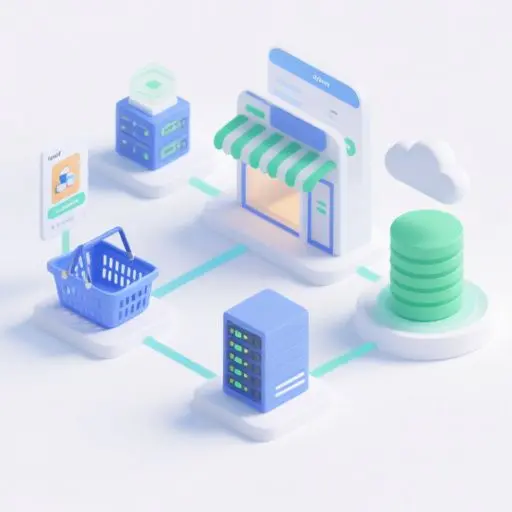
An ecommerce tech stack is the full set of technologies behind the customer experience, business rules, data, integrations, and hosting. The frontend shows products and checkout steps. The backend handles carts, orders, inventory, pricing, and customer accounts. A database keeps operational records, while APIs connect services for payments, shipping, email, analytics, and an ERP.
For a small team, clear boundaries matter more than having lots of tools. We prefer an architecture where developers know which system owns product data, inventory, orders, and customer records. That ownership avoids duplicate data and fragile synchronization as the store grows. Founders planning a quick validation cycle can also use our practical guide to build an ecommerce MVP quickly before committing to custom features.
Questions to Answer Before Choosing Technologies
The best stack decision starts with product and operational requirements, not a framework comparison. During discovery, our team maps the buying journey, administrative workflow, integrations, and likely technical risks.
- Are you selling physical products, subscriptions, downloads, marketplace listings, or configurable products?
- How many products, variants, currencies, warehouses, and customer regions must the first release support?
- Do inventory, tax, shipping, or pricing rules come from another business system?
- Can your current team maintain JavaScript, PHP, Node.js, React, or cloud infrastructure?
- Must the MVP launch in six to eight weeks, or can the business fund a longer custom build?
Channel strategy matters too. A responsive storefront is usually the quickest place to start, while repeat purchasing, offline features, or device capabilities can justify a dedicated application. Our comparison of building a website or mobile app first helps settle that decision before architecture work starts.
Modern Ecommerce Stacks That Fit Most Startups

Most startups can do well with a hosted commerce platform, a WooCommerce build, or a headless JavaScript architecture. We evaluate these patterns regularly because each comes with a different mix of control, delivery speed, and ongoing responsibility.
Hosted Shopify Stack
Shopify with a customized theme is a sensible choice when standard products, familiar checkout flows, and fast market entry matter most. If the storefront needs a more tailored experience, Shopify also supports a headless frontend through its Storefront API and Hydrogen toolkit. Headless delivery needs a clear commercial reason, since it adds deployment, preview, caching, and maintenance work.
WordPress and WooCommerce Stack
WordPress, WooCommerce, PHP, MySQL, a CDN, and managed hosting suit content-led stores and teams that need flexible editorial control. WooCommerce supports dedicated order storage through High-Performance Order Storage, though plugin quality and hosting configuration still need careful review. Zluck’s WooCommerce development experience is particularly useful when a startup needs custom product rules or integrations.
Next.js and Composable Commerce
Next.js with TypeScript can create a fast, flexible storefront connected to Shopify, Medusa, or another commerce backend. Medusa provides modules for products, carts, inventory, pricing, orders, and fulfillment, which makes it useful when custom workflows sit at the center of the business. PostgreSQL is a common database choice for custom transactional systems, while Redis can be added for caching or queues when measured demand calls for it.
How the Stack Changes Speed, Cost, and Hiring
Your architecture affects how quickly developers ship features, how much infrastructure needs oversight, and which specialists you need to hire. A familiar platform can cut the custom code needed for checkout, taxes, order management, discounts, and customer accounts.
We’ve seen small builds lose momentum when they need separate specialists for frontend code, backend services, cloud operations, and commerce administration. A focused team using Shopify or WooCommerce can often cover more of the launch scope. A custom Next.js and Node.js stack offers more flexibility, but it also needs stronger API design, testing, observability, and deployment skills.
Hosting is rarely the only expense. Set aside budget for platform subscriptions, premium extensions, payment fees, monitoring, transactional email, search, maintenance, and integration support. Those recurring responsibilities belong in the technical plan before development starts.
Avoid Architecture That Overwhelms a Small Team
A startup should avoid distributed architecture until product requirements or measured load make it necessary. Microservices, Kubernetes, multiple databases, event streaming, and custom authentication can take up the same engineering capacity needed for merchandising and conversion improvements.
- Keep the storefront and commerce logic in one deployable application where practical.
- Use the platform’s checkout and order capabilities before replacing them.
- Add a search service only when catalog size or search behavior demands it.
- Choose one analytics implementation and define essential conversion events.
- Automate backups, tests, deployments, and error monitoring from the first release.
Performance issues also come from oversized images, too many third-party scripts, poor caching, and uncontrolled plugins. Before rebuilding the architecture, use a structured process to diagnose a slow ecommerce site and confirm where the bottleneck actually is.
Stack Examples for Three Growth Levels
A useful stack matches current complexity to the next realistic stage of growth. The examples below reflect combinations we would consider in an initial architecture workshop.
| Stage | Suggested Stack | Best Fit | Main Watchpoint |
|---|---|---|---|
| Lean MVP | Shopify theme or WooCommerce, managed hosting, platform checkout | Standard catalog and fast validation | App or plugin sprawl |
| Growing Store | Next.js, Shopify APIs, TypeScript, managed deployment | Custom UX and content-rich commerce | Headless maintenance cost |
| Complex Scale | Next.js, Medusa or custom Node.js services, PostgreSQL, Redis | Custom pricing, fulfillment, or multichannel workflows | Operational and testing overhead |
The best tech stack for ecommerce startup growth may shift from the first row to the second over time. That doesn’t mean the MVP was wrong. A clean theme-based store can validate demand before the team invests in a headless commerce experience, and a modular backend can be added when custom operations become a competitive advantage.
Choose a Stack You Can Support for the Next Year
The final choice should be maintainable by the team you have and support the next 12 months of realistic product work. Document the chosen platform, frontend, backend, database, hosting, integrations, data ownership, security controls, and deployment process in a short architecture decision record.
- Define the smallest launch scope and three essential integrations.
- Prototype the highest-risk product or checkout workflow.
- Estimate build cost and monthly operating cost separately.
- Confirm who will monitor, update, test, and support each component.
- Review the architecture after real traffic and order data become available.
Our team generally recommends technologies that make the first release predictable and leave clean API boundaries for future expansion. If you want an experienced team to review your storefront, performance, and technical risks, request a Zluck free website audit today.
Frequently Asked Questions
What is the best tech stack for ecommerce startup development in 2026?
For many early-stage stores, Shopify with a customized theme or WooCommerce with managed hosting is the fastest route to launch. We look at Next.js with Shopify APIs or Medusa when the business needs a distinctive storefront, custom pricing, complex fulfillment, or multiple sales channels.
Should an ecommerce startup use headless commerce?
Headless commerce makes sense when a standard theme can't support the customer experience or integrations you need. We recommend confirming that the expected conversion, content, or multichannel benefit is worth the extra frontend development, hosting, testing, and maintenance.
Is Next.js a good choice for an ecommerce storefront?
Yes. Next.js and TypeScript can support fast, SEO-friendly storefronts and connect with platforms such as Shopify or Medusa. The startup still needs experienced developers to handle caching, API calls, checkout handoffs, analytics, deployments, and ongoing framework updates.
How long should a startup keep its first ecommerce stack?
Plan for the first stack to support at least 12 months of product development and realistic growth. In our experience, reviewing the architecture quarterly works better than rebuilding too early. Upgrade individual components once traffic, operational complexity, or customer behavior gives you a measurable reason.
What is the biggest ecommerce technology mistake startups make?
A common mistake is choosing an architecture built for hypothetical scale while the core buying journey is still unvalidated. We prioritize reliable catalog management, checkout, payments, fulfillment, analytics, and maintainability before adding microservices or specialized infrastructure.