Choosing a mobile app vs website for ecommerce can feel like a decision that shapes the whole business. Founders often worry a website will limit engagement, or that an app will burn through the budget before demand is proven. In our experience planning ecommerce products, the safest call is to match the platform to current buying habits, operational capacity, and the next growth milestone you can measure.
Why Founders Struggle With The Platform Decision
Founders struggle with this decision because they often compare features before confirming how customers find and buy their products. An app can look more premium in a pitch deck, but customers still need to find it, install it, grant permissions, and remember to open it. A responsive website skips most of that friction and lets traffic arrive through Google, social campaigns, email, referrals, and direct links.
During early planning workshops, we ask where the first 1,000 customers will come from and how often they’re likely to reorder. If acquisition relies on search and paid advertising, the website usually comes first. If an established audience already buys several times a month, an app is easier to justify. This user-first approach also helps teams build an ecommerce MVP quickly without filling the launch with unproven features.
Mobile App Vs Website For Ecommerce Capabilities
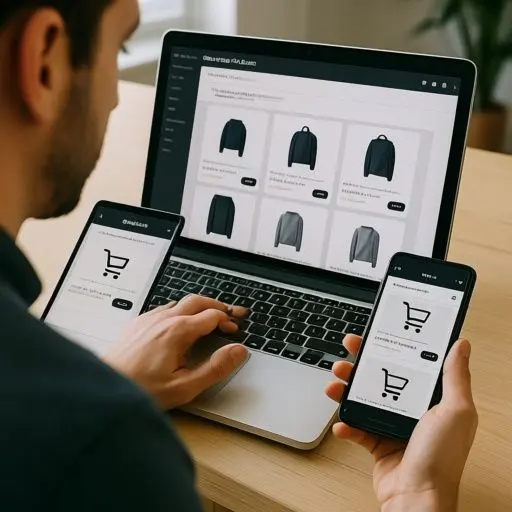
A well-built ecommerce website can handle the full customer journey, from discovery and product filtering to checkout, account management, subscriptions, and repeat orders. Responsive web design adjusts to phones, tablets, and desktops. Platforms such as WooCommerce and headless React storefronts can also connect with payment gateways, inventory systems, analytics, and customer relationship management software.
Mobile browsers can support digital wallets, saved addresses, location features, and account-based personalization too. A Progressive Web App can add home-screen installation, caching, and selected offline behavior without separate iOS and Android releases. For plenty of stores, faster mobile pages and a simpler checkout create more immediate value than building another sales channel. Our mobile optimization guide covers the design and performance basics behind that experience.
Where A Mobile App Creates A Stronger Experience
A mobile app works best when frequent customers need quicker access, deeper personalization, or device-level features. It can keep users signed in, save selected content offline, work with cameras or location services, and send push notifications without depending on an open browser tab.
The strongest app opportunities we see usually include one or more of these needs:
- Customers reorder products weekly or monthly.
- Loyalty points, memberships, or personalized offers drive retention.
- Users need barcode scanning, location tracking, or camera-based search.
- Offline browsing matters in stores, warehouses, or low-connectivity areas.
- Push notifications support useful events such as restocks, deliveries, and expiring rewards.
Push notifications alone won’t create loyalty. The offer, timing, and customer value still count. We design notification strategy alongside segmentation and consent controls. Once an app is live, teams should measure activation, repeat sessions, purchases, and churn with a structured app retention playbook.
Cost, Timeline, And Maintenance Differences
A responsive ecommerce website is generally quicker to launch and easier to maintain than separate mobile applications. In our project planning, a focused website MVP commonly fits a 6-to-10-week delivery window, while a custom app and supporting backend can take 10 to 16 weeks, depending on integrations, checkout rules, and testing scope.
This comparison shows where the ongoing work usually appears when weighing an ecommerce app against a website:
| Factor | Ecommerce Website | Mobile App |
|---|---|---|
| Initial delivery | One responsive build | iOS, Android, or cross-platform build |
| Updates | Published directly to the server | May require store submission and review |
| Discovery | Search, ads, links, and social channels | App store visibility plus install campaigns |
| Testing | Browsers, devices, checkout, and integrations | Operating systems, devices, permissions, and integrations |
| Ongoing work | Security, content, speed, and conversion improvements | All website or API work plus app releases and compatibility |
A poorly optimized website can still waste advertising spend, so a fast launch should never replace performance testing. Before adding an app, we often suggest teams first fix a slow ecommerce site and fix checkout bottlenecks that would otherwise carry over into the new product.
Signs Your Ecommerce Store Is Ready For An App
Your store is ready for an app when customer behavior shows enough repeat value to cover development and acquisition costs. Revenue matters, but order frequency, retention, and feature demand are clearer signals.
- Repeat purchases are consistent: A meaningful customer segment returns without heavy discounting.
- Mobile traffic converts well: Shoppers already trust the brand and complete purchases on smaller screens.
- Order volume supports investment: The potential increase in customer lifetime value can cover development and maintenance.
- Customers request convenience: Saved routines, rapid reordering, loyalty wallets, or app-only workflows solve observed problems.
- The team can market the app: Email, packaging, stores, and account pages can promote installation to existing buyers.
We also look for a clear success metric. A store might aim to increase second purchases within 60 days or reduce reorder time by 30%. Without a measurable target, an app can become an expensive copy of the website.
Choosing Your 90-Day Ecommerce Roadmap
The right 90-day plan depends on whether you’re validating demand, improving an established store, or supporting an app-dependent buying workflow. We usually recommend one of three paths.

Website First
This path suits new brands, search-led businesses, limited budgets, and products bought only occasionally. Start with customer research, responsive UX, a focused catalog, analytics, and a fast checkout. Release the smallest credible store, watch real sessions, and prioritize improvements using conversion data.
Website Now, App Later
This path works for growing stores with repeat buyers but not enough evidence for an immediate app investment. During the first month, improve mobile conversion and track retention events. In month two, interview frequent customers and prototype app-only benefits. In month three, test the prototype and define the API, analytics, and release plan. This staged approach keeps the platform decision tied to evidence.
App First
An app-first launch suits a narrower group, products built around frequent interaction, offline activity, device hardware, or membership access. Even then, we usually create a lightweight website for discovery, support, account recovery, legal information, and app installation. React Native or Flutter can reduce duplicated interface work, but backend architecture, quality assurance, and store preparation still need dedicated planning.
Before committing the next 90 days, document your acquisition channels, repeat purchase rate, required integrations, budget range, and one primary success metric. Zluck can review those inputs and recommend a practical website, app, or staged architecture through a free consultation with our mobile and web application development team.
Frequently Asked Questions
Should a new ecommerce business build a website or mobile app first?
Most new ecommerce businesses should start with a responsive website. It supports search discovery, advertising links, and checkout without asking customers to install anything. We only recommend starting with an app when device features, offline access, or very frequent interaction are central to the product.
Can a Progressive Web App replace a native ecommerce app?
A Progressive Web App can offer installation, caching, responsive shopping, and selected offline features through the browser. It can be a useful middle step. Native or cross-platform apps are still stronger when you need deeper device integration, advanced notifications, or complex background activity.
How do you know when an ecommerce mobile app will be profitable?
Estimate how an app could affect purchase frequency, retention, average order value, and service costs. We look for an established repeat-customer segment, a clear app-specific benefit, reliable acquisition channels, and a measurable target before recommending development.
Do ecommerce businesses need separate iOS and Android apps?
Not always. React Native and Flutter can support both platforms from a shared codebase, though platform-specific testing and release work are still required. The right choice depends on feature complexity, performance expectations, internal expertise, and the long-term maintenance plan.