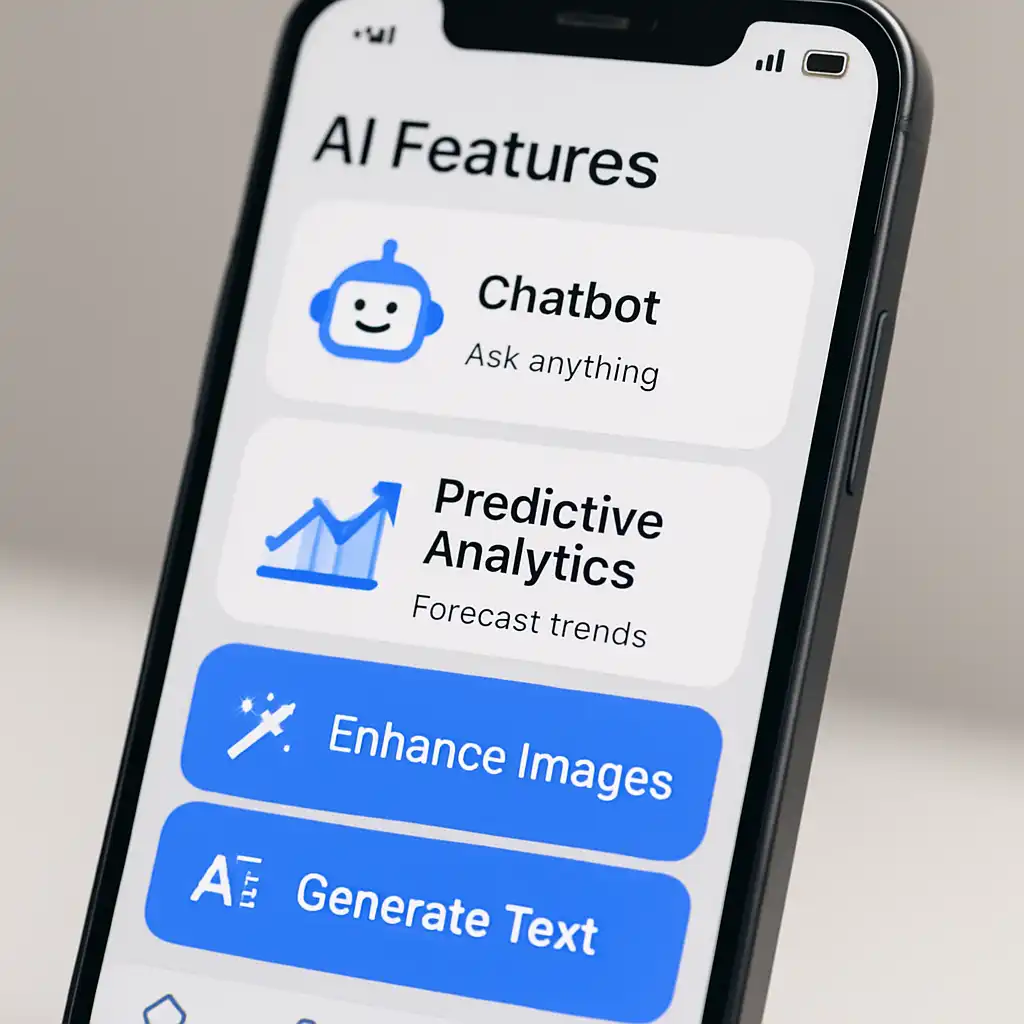
The biggest mobile app trends in 2026 are AI built into the core experience rather than added as a feature, mature cross-platform development with Flutter and React Native, privacy and security as a selling point, a relentless focus on speed and simplicity, and apps that integrate deeply with other tools and devices. For founders, the common thread is that user expectations have risen sharply, so building the right app well matters more than ever.
Mobile apps are how most people now interact with the businesses they rely on, from banking and healthcare to shopping, fitness, and work. For founders and businesses planning to build an app, understanding where the landscape is heading is not idle curiosity; the technology and design decisions you make today determine what your product can do, how fast you reach the market, and how much it costs to maintain.
The app market in 2026 is more competitive and more sophisticated than ever. Users have high expectations and little patience, and the gap between a great app and a forgettable one has widened. Here are the trends shaping mobile app development right now, and what each one means if you are planning to build.
1. AI Is Built Into the Core, Not Bolted On

The single biggest shift is that artificial intelligence is no longer a feature you sprinkle on at the end. In 2026, the most competitive apps treat AI as part of the core experience. That means personalising content in real time based on how someone actually uses the app, automating tasks that used to require manual input, answering user questions in natural language, and surfacing the right information at the right moment.
Think of a finance app that categorises spending and flags unusual activity automatically, or a health app that interprets data and offers genuinely useful guidance, or a productivity app that drafts and summarises on the user’s behalf. The question for anyone building a new app is no longer whether to use AI, but where it genuinely improves the experience rather than being added for its own sake.
For founders, this matters because building AI in well requires planning from the start. The data model, the architecture, and the choice of AI capabilities all need to be considered at the scoping stage, not retrofitted later. An app built AI-native from day one is far stronger than one where AI is bolted on afterwards.
2. Cross-Platform Development Has Fully Matured
Building separate native apps for iOS and Android used to mean roughly double the cost, double the timeline, and two codebases to maintain forever. Cross-platform frameworks have changed that equation. Flutter and React Native have matured to the point where a single codebase can deliver a fast, native-feeling experience on both platforms simultaneously.
For most businesses, this means reaching the market faster, spending less on the initial build, and maintaining the app more cheaply over its life, because a fix or a new feature is written once and deployed everywhere. The quality gap that once made people insist on fully native development has narrowed dramatically for the vast majority of app types.
There are still cases where fully native development is the right call, typically apps with very heavy performance demands or deep platform-specific hardware integration. But for most startups and businesses, a well-built cross-platform app is now the smart default, and choosing the right framework for your specific needs is a decision worth getting expert input on.
3. Privacy and Security Have Become a Selling Point
Users are more aware than ever of how their personal data is collected and used, and the platform rules around privacy keep tightening with every iOS and Android release. In 2026, strong privacy and security are no longer just compliance boxes to tick. They have become something users actively look for and choose between apps based on.
Apps that are transparent about what data they collect, that ask for only what they genuinely need, and that protect user information with proper security are rewarded with trust and retention. Apps that are careless with data face deletion, bad reviews, app store rejection, and in some cases legal exposure. For founders, building privacy and security in from the foundation is both a risk-management necessity and a genuine competitive advantage you can market.
4. Speed and Simplicity Win the Market
As apps add more capability, the ones that succeed are those that stay fast and simple to use. Users decide within seconds whether a new app is worth keeping, and a cluttered, slow, or confusing first experience is the fastest route to deletion.
The winning pattern in 2026 is fast load and response times, onboarding that gets a user to real value in the first minute rather than burying them in setup, and interfaces that do one thing clearly rather than ten things confusingly. The discipline of doing less, but doing it excellently, consistently beats feature-stuffed apps that overwhelm. For founders, this is a reminder that the minimum viable product should be genuinely usable and focused, not a sprawling list of half-finished features.
5. Apps That Connect to Everything
Modern apps rarely stand alone. They connect to payment systems, messaging platforms, wearables and smart devices, and the other software a business already runs on. The trend in 2026 is firmly toward apps that fit smoothly into a user’s existing digital life and a company’s existing tool stack, rather than asking everyone to start from scratch in a walled garden.
Good integration is increasingly what makes an app genuinely useful day to day. An app that talks to the tools people already use, syncs across their devices, and slots into their existing workflow earns a permanent place on the home screen. For founders, thinking early about which integrations matter most to your users can be the difference between an app people try once and one they rely on.
What These Trends Mean If You Are Planning to Build
The common thread running through all five trends is that user expectations have risen sharply. People now expect apps to be intelligent, fast, secure, simple, and well connected from the very first launch. Meeting that bar is harder than it used to be, and it takes more than just writing code that works.
It takes a development partner who understands not just how to build an app, but how to build the right app for your specific users and business goals, who can advise on AI, choose the right cross-platform approach, build security in from the start, and keep the experience fast and focused. Getting these decisions right at the scoping and architecture stage is what separates apps that gain traction from apps that quietly disappear.
Frequently Asked Questions
No schema found.Building the Right App for 2026 and Beyond
The mobile app landscape rewards apps that are intelligent, fast, secure, simple, and well connected. Meeting those raised expectations takes the right decisions at the start, on AI, on platform strategy, on security, and on scope, and a team that can execute them well.
Zluck builds custom mobile apps for startups and growing businesses across iOS, Android, and cross-platform with Flutter and React Native. If you are planning an app and want to build it right the first time, get in touch for a free scoping conversation, and we will help you map the smartest path from idea to launch.