How much does clinic booking app cost is the question we hear most from clinics and health startups planning digital appointments. In 2026 prices vary widely – from plug-and-play tools costing under $50/month to fully custom native apps that run into six figures. Below I’ll share our team’s direct experience building clinic scheduling systems, real cost drivers, and a pragmatic path to get a working product fast.
How much does clinic booking app cost – price bands and real examples
From projects we’ve delivered, costs fall into three practical bands:
1) Template-based SaaS / Widgets: $0 – $100/month. These are Calendly-style embeds, patient-facing booking pages or WordPress plugins. Good for small practices that need online slots, reminders, and simple intake forms. Setup: hours to a couple of days.
2) Custom web app (responsive): $8, 000 – $60, 000. A clinic portal, provider dashboard, admin scheduling, SMS/email reminders, and light EHR sync via APIs. We’ve built mid-range systems for community clinics near $25k with multi-provider calendars and secure patient messaging.
3) Native mobile apps + enterprise integrations: $60, 000 – $250, 000+. Full iOS/Android apps, telemedicine, payments, deep EHR/HL7/FHIR integrations, complex insurance eligibility checks, and HIPAA-grade security. Large hospitals or multi-clinic networks commonly land here.
Features that move the needle on cost
It’s not the “booking” itself – it’s the extras. From our projects, these features materially increase scope and cost:
Reminders & two-way messaging: Adding SMS and secure in-app messages adds monthly third-party costs (Twilio/SMS gateway) and development for secure threads.
Patient portal and records: Allowing patients to view records or intake forms requires stronger auth, encryption, and possibly EHR integration.
Telemedicine: Real-time video with recording or multi-party consults raises costs significantly: media servers, scaling, compliance checks.
Insurance & eligibility checks: Live insurance validation involves third-party services or custom integrations and adds both dev time and transaction fees.
Multi-location and role-based access: Scheduling rules per location, provider availability, and admin roles add complexity to the data model and UI.
One-time build costs versus ongoing monthly costs
From our delivery experience, plan for two buckets:
Upfront development: Design, development, QA, initial integrations. For a modest custom web app expect to budget for 2 – 6 months of team time.
Ongoing costs (monthly/annual): Hosting, monitoring, backups, SMS/email credits, third-party services (video, payments), and support. Typical monthly run-rate after launch is 2 – 10% of the initial build cost. For enterprise apps with heavy video or EHR sync, it can be 10 – 20%.
Start small: an MVP approach that saves money
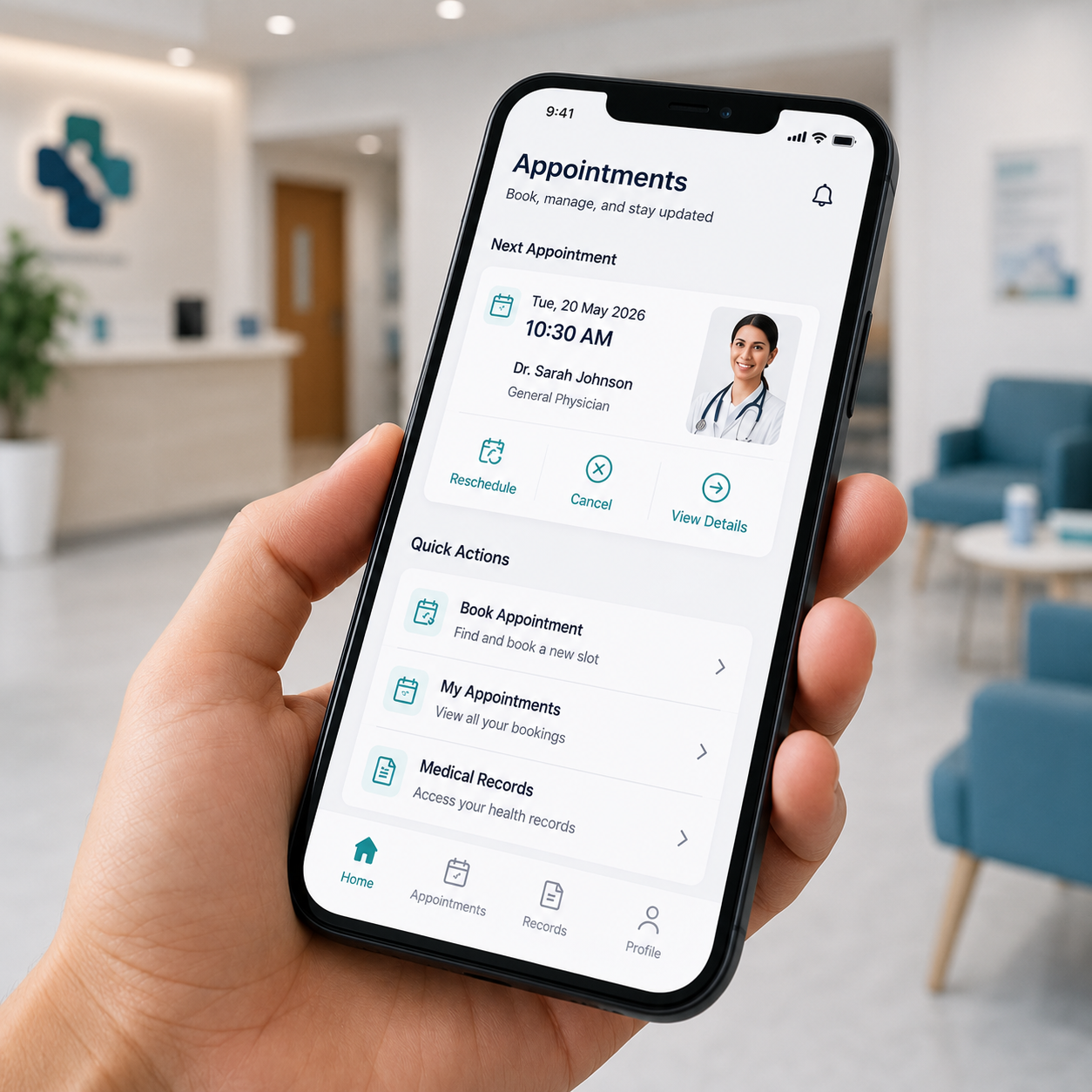
We advise clinics to start with a minimal viable booking flow: provider calendar, patient booking page, confirmations, and basic reminders. Launch quickly, measure no-shows and patient feedback, then add telemedicine, patient portals, or insurance checks in phases. Building iteratively reduces wasted effort and keeps costs predictable. For help launching fast, consider our MVP development services to scope an MVP with realistic timelines and cost caps.
How to get realistic, comparable vendor quotes
To avoid wildly different proposals, prepare and share:
- Exact user flows (patient books, cancels, reschedules) and required integrations (EHR vendor, payment gateway).
- Expected monthly active users and peak concurrency (telemedicine).
- Compliance needs (HIPAA, GDPR) and hosting preferences (cloud region).
- Non-functional requirements: uptime, backups, SLAs.
Ask vendors for itemized quotes (design, frontend, backend, integrations, QA, first-year hosting/support) and an estimate of monthly run-costs. We include a maintenance line-item in every proposal to avoid surprises.
Deciding your budget and next steps
If you need a quick rule of thumb: a serious small clinic should budget $10k – $40k to own a solid custom web booking system; a multi-clinic or patient-facing mobile app should expect $60k+. For tight budgets, start with SaaS, then move to custom as patient volume and feature needs grow.
From our direct work building clinic scheduling products, the most common cost overruns come from late EHR requirements and telemedicine scale. Lock integrations and compliance needs early, and prioritize the patient flow that reduces no-shows – that’s where you’ll recover costs fastest.
Final practical checklist before you get quotes
1) Map core booking flow and required integrations.
2) Decide must-have vs. nice-to-have features for launch.
3) Ask for itemized proposals and a 12-month run-rate.
4) Pilot with one site/provider before a full roll-out.
Want an objective estimate?
We’ve scoped clinic booking MVPs and enterprise systems across multiple regions – if you share your flows and expected volume we can give a realistic range and roadmap based on prior builds and real operational costs.
Frequently Asked Questions
How quickly can a basic clinic booking MVP launch?
From our projects, a web-based MVP (booking page, admin calendar, email reminders) can launch in 4 – 8 weeks with a small team if integrations are minimal. We prioritize the core flow and postpone integrations like EHR to phase 2.
Are off-the-shelf SaaS solutions cheaper long-term?
Initially yes – SaaS reduces upfront spend. But at scale, per-transaction fees or rigid workflows can make SaaS costlier and limit automation. We often recommend starting SaaS and migrating to custom when patient volume justifies it.
What hidden fees do clinics miss?
SMS and video provider costs, compliance audits, data-export/migration work, and support SLAs. In one project, unexpected API rate limits from an EHR vendor added months of rework; verify API limits and costs early.
How do you secure patient data?
We implement encrypted storage, secure auth (OAuth2 or SSO), network isolation, and regular audits. Compliance choices (HIPAA) influence architecture and therefore the budget.